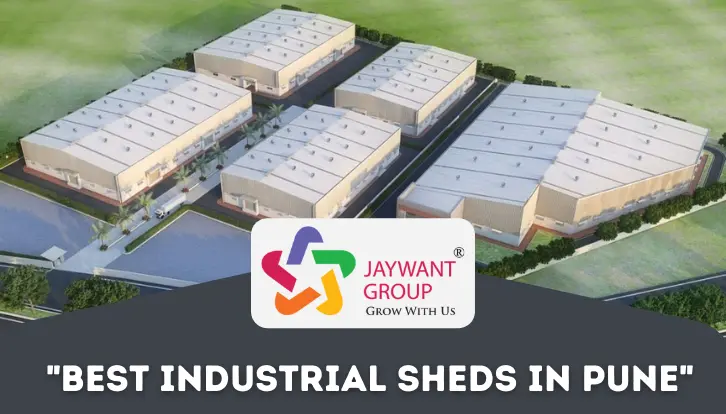
Best Industrial Sheds In Pune
Consumerism has resulted in rapid industry and product line diversification. The variety and scale of industrial and warehousing setups has grown dramatically, necessitating an ever-increasing amount of space for businesses and industries. While reinforced cement concrete (RCC) structures have long been the standard, the arrival of PEBs has caused a global shift (pre-engineered buildings). These have been a boon because of their smart' application advantage, which allows owners to have them made exactly how they want them and erected in a short amount of time. Prefabricated factory sheds, offices, and warehouses work like a magic wand, allowing you to build whatever structure you want for whatever purpose you want.
What do industrial sheds entail?
Pre-engineered buildings include
industrial sheds
. Pre-engineered buildings, as the name implies, are prefabricated steel structures (preferably galvanized). Unlike cement and concrete buildings, these structures are built in factories and never on-site. On-site, only one thing is done: erection. The parts are bolted and welded together (rarely); the erection process takes no more than a few weeks. As a result, they are a quick option for those who want to get their business up and running quickly. In a nutshell, it's for everyone. Is it just the speed of construction that makes industrialists and businesspeople prefer it to cement buildings? Even if it's difficult to believe — NO, industrial sheds are far ahead of their residential counterparts in a number of ways, and they're like a magician's hat — full of surprises.Industrial sheds are increasing in number.
Try to guess how old the industrial sheds are. Is it 40 or 50 years? If you go back in
time, you'll be surprised to learn that industrial sheds were first used in 1909. It was
fate that brought Ford's Model T and the Butler brothers together in the United States.
Agricultural sheds were the brothers' specialty. The owners of Ford's Model T required
car pods. With their novel steel fabrication, the Butler brothers emerged as the
PEB shed manufacturer
, and thus the story began. Metal fabrications became more popular as time went on. During World War II, they were used as plane hangars and Quonset huts in war zones. Industrial sheds have never looked back since. They have, in fact, embraced changes in style, appearance, and adaptability.PEBs have only recently become popular in India, despite the fact that they were first introduced decades ago. It is currently the fastest-growing market, with PEBs accounting for roughly one-third of all new construction.
The Different Types of Prefabricated Structures
It's critical to clarify which industrial sheds are appropriate for which industries.
Let's take a look at some of the most common types.
1.Buildings for heavy industry
These structures, which include large machines and furnaces as well as large
warehouses
, are demanding due to the variety of equipment and processes involved, such as cement factories and automobile manufacturing plants. There's also a lot of wiring, heat, machinery, and other technical considerations. Coatings to prevent corrosion, heat resistance, water resistance, and other physical aspects may be required with industrial sheds customized to meet demands, including physical aspects.2.Warehouses
Due to the loading and unloading processes by large trucks, these are typically very
large and located outside of cities. They're also sometimes found near airports. As a
storage facility for a variety of goods, it's critical that the structure be
well-layered and protected from external weather influences such as rain. Pre-engineered
warehouses aren't just faster to build; they're also a better option, thanks to the
extra space created by the lack of pillars. Apart from the ones who make it all, there
are warehouse shade manufacturers specifically for warehouses in the market for
industrial sheds.
3.Cold storage structures
Cold storage is a critical requirement for developing countries, particularly those with
difficult weather conditions, such as India. We are excellent in terms of production,
but we lag behind in terms of cold storage facilities, which impedes the overall
progress of the industry and leads to wastage of goods such as meat, food grains,
pharmaceuticals, and so on. The ability to customize cold storage units with the right
design, including roofing and coating, allows for the creation of a more efficient
center. In addition, pre-treated sheds for heat (and cold) insulation reduce energy
costs.
4.Buildings that produce light
This category includes items such as food processing units and light-electricity items.
Light machinery is used instead of heavy machinery, which takes up less space. When a
business grows, using industrial sheds allows for easier expansion and modification of
the structure from within. As a result, the owner can customize the product at a low
cost.
5.Research and development centers
Today, R&D is at the heart of every business. The R&D units come with a variety of
amenities. There's also a need for a controlled environment on the inside. Many R&D
centers also have residential sections for researchers and other staff, in addition to
other amenities such as labs, testing centers, meeting rooms, and so on, because R&D
operations in some sectors run 24 hours a day, seven days a week. Industrial sheds for
research and development are built with ventilation and air-tight zone requirements in
mind.
6.Flexible structures
This type of industrial shed is a new trend
that combines elements from all of the categories above into a single structure. It can
accommodate a variety of spaces, including light machinery, offices, showrooms, and
residential units. New start-ups in developed countries are choosing these because they
offer easier customization, more space, and lower rents. This is a recent innovation in
the West, and it is expected to make its way into developing countries soon.
Why choose industrial sheds?
Due to their quick fabrication, industrial sheds have long been a boon to business
owners. To gain favor in the industrial arena,
industrial shed manufacturers
have ensured that their 'customization' feature is widely disseminated. They are now used for a variety of structural purposes in addition to industrial sheds. In a previous blog , we discussed the benefits of industrial sheds.The following are a few key advantages:
VALUE FOR MONEY: Industry sheds are less expensive than traditional structures
and can
be estimated accurately. They also require little upkeep and can be easily dismantled
and reused.
SPEED: They are manufactured off-site and only need to be bolted together. When compared to RCC buildings, this can cut construction time in half or more.
COMFORT: Industrial shed manufacturers can treat the sheds for insulation during the manufacturing process, saving energy costs and extending the life of the insulation.
SPACE: Pre-engineered buildings have longer spans than RCC structures because their weight distribution is better. As a result, there is more usable floor space.
PRECISION: In traditional construction, due to local conditions and terrain, the blueprint and reality can differ. Computer-aided systems are used to precisely engineer pre-engineered structures.